Exploring the potential of Aluminum Foundry for manufacturing teams
Wiki Article
A Comprehensive Overview to the Different Kinds and Use Aluminum Shop
The world of aluminum factory incorporates various casting techniques, each serving distinct applications. From the adaptability of sand spreading to the precision of die spreading, these methods cater to various production demands. Financial investment spreading uses intricate layouts, while long-term mold and mildew casting emphasizes stamina. Recognizing the qualities of aluminum alloys is crucial for optimizing these processes. Checking out the subtleties of each spreading technique exposes important insights for reliable task implementation. What factors should one consider when selecting the most suitable method?Introduction of Light Weight Aluminum Factory Processes
Aluminum shop procedures encompass a collection of techniques utilized to cast and form aluminum right into various kinds. These procedures can be broadly categorized right into melting, molding, and finishing. The initial step entails melting light weight aluminum, usually done in heaters that get to heats to attain a liquid state. Once melted, the light weight aluminum is poured right into mold and mildews, which specify the last shape of the actors product.Numerous molding methods exist, such as die casting and investment spreading, each offering distinct advantages depending upon the preferred precision and intricacy of the final thing. After the light weight aluminum has cooled down and strengthened, the casting undergoes completing processes, which may consist of machining, surface area treatment, and assembly. These steps ensure that the last product satisfies certain tolerances and surface area high quality standards. With each other, these procedures develop a comprehensive method to aluminum spreading, accommodating diverse commercial applications and item needs.
Sand Spreading in Light Weight Aluminum Foundries
Sand spreading is a fundamental procedure in light weight aluminum shops, identified by its use sand mold and mildews to shape molten metal. This approach uses numerous benefits, including cost-effectiveness and flexibility, making it ideal for a vast array of industrial applications. Understanding the intricacies of the sand spreading process is important for enhancing production and accomplishing preferred product homes.Sand Spreading Refine Review
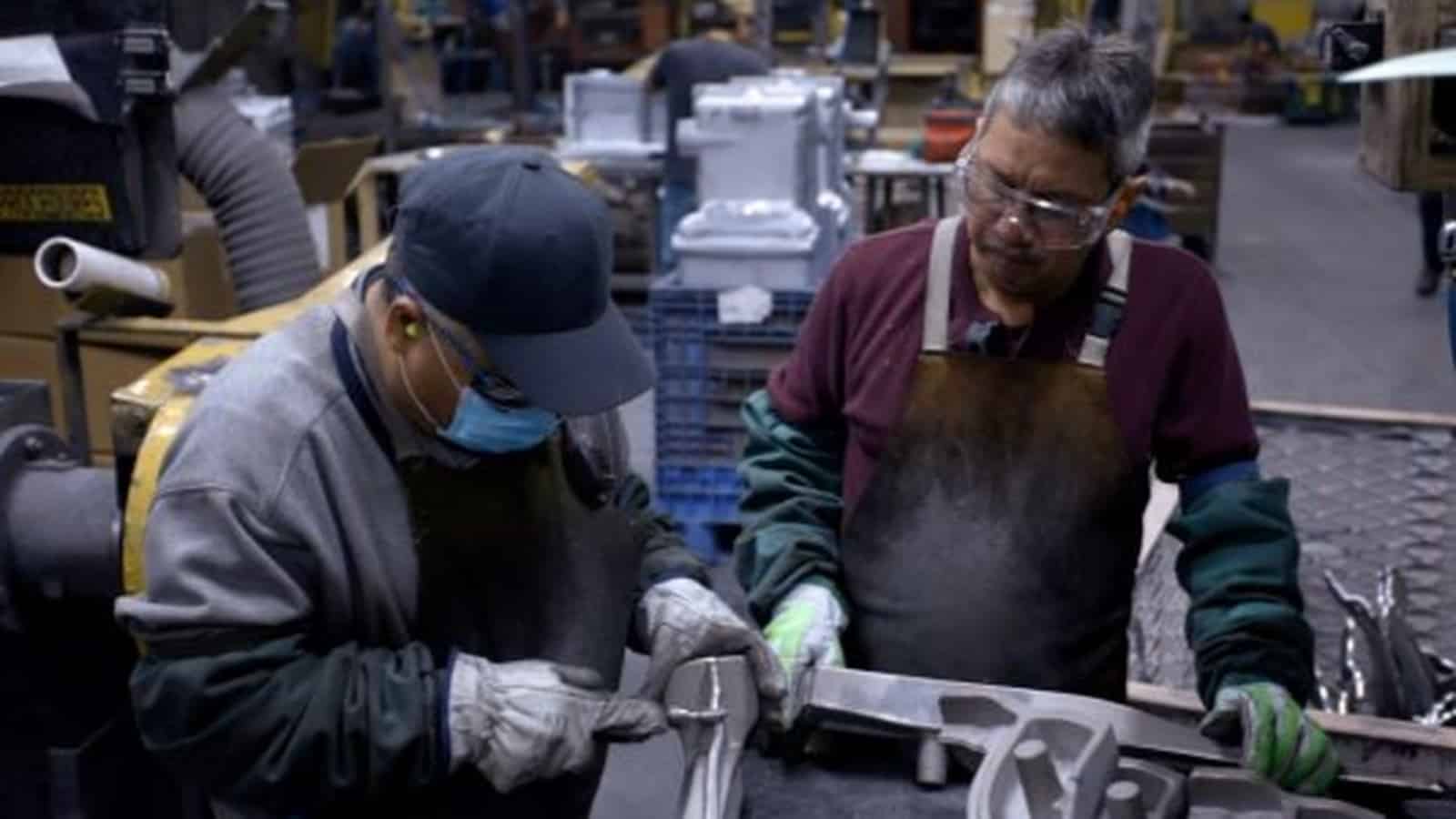
The sand casting procedure functions as an essential approach in light weight aluminum shops, promoting the development of elaborate metal elements. This process begins with the prep work of a sand mold and mildew, which is formed by compacting sand around a pattern that represents the final product. As soon as the mold and mildew is put together, molten light weight aluminum is poured into the tooth cavity, permitting it to take form. After cooling down, the mold is broken away to expose the actors element. Sand spreading is remarkable for its adaptability, accommodating different forms and dimensions, from little components to large structures. In addition, this technique enables the consolidation of complicated designs, making it a preferred selection for lots of industries requiring personalized light weight aluminum parts.Benefits of Sand Casting
Applications in Industries
Casting processes play a necessary function in various sectors, with sand spreading being a prominent approach for aluminum applications. This strategy is extensively used in automotive manufacturing, allowing for the manufacturing of engine blocks, transmission instances, and numerous structural parts. Furthermore, the aerospace sector leverages sand spreading to develop light-weight yet sturdy parts, contributing to sustain effectiveness and efficiency. The electric industry also gains from sand-cast aluminum elements, such as housings and rooms, which provide robust defense for delicate tools. On top of that, the building field employs sand casting for building aspects and fixtures, showcasing aluminum's adaptability. On the whole, sand spreading in light weight aluminum shops offers multiple industries, conference varied demands while optimizing product buildings and production efficiency.Die Casting Techniques and Applications
Die casting is an accuracy production process made use of to generate complicated steel get rid of high dimensional precision and superb surface finishes. This strategy entails requiring liquified light weight aluminum right into a mold and mildew under high pressure, making sure that also elaborate layouts can be reproduced with exceptional consistency. 2 primary die spreading methods are warm chamber and cold chamber die casting. Warm chamber die casting appropriates for metals with reduced melting points and allows for faster production cycles, while cool chamber die spreading is ideal for higher melting point steels and gives greater control over metal flow.Applications of die casting span various markets, including auto, aerospace, and electronics. Parts such as engine braces, blocks, and real estates gain from the toughness and light-weight residential properties of aluminum. The adaptability and performance of die casting make it a necessary process in producing high-grade light weight aluminum parts that fulfill rigid industry standards.
Investment Spreading: Accuracy and Information
Financial investment spreading is an advanced manufacturing process understood for its capacity to produce elaborate components with high precision. This strategy finds applications throughout different markets, consisting of aerospace and automobile, where detail is critical. The benefits of financial investment casting, such as decreased material waste and enhanced surface area finish, make it a preferred choice for several engineers.Process Summary and Techniques
Using investment casting, producers achieve exceptional precision and detailed information in light weight aluminum elements. This process starts with producing a wax pattern, which is coated in a ceramic shell. Once the covering sets, the wax is thawed and drained pipes, leaving a dental caries for the liquified light weight aluminum. The aluminum is after that put right into the mold and mildew, enabling fine attributes and complex geometries. After cooling down, the shell is damaged away, disclosing the light weight aluminum part. Techniques such as vacuum investment spreading boost precision by minimizing air entrapment, while stress spreading offers improved surface area coating. This careful process not just check my blog guarantees dimensional accuracy however likewise minimizes material waste, making it a reliable choice for generating high-quality light weight aluminum components in different industries.Applications in Industries
The remarkable precision and elaborate information achieved via investment casting make it a recommended approach in various industries. This method is particularly prominent in aerospace, where components require limited tolerances and complicated geometries. In the auto sector, financial investment casting is used for generating parts like engine blocks and transmission real estates, ensuring longevity and performance. Furthermore, the clinical market advantages from financial investment spreading to develop specialized tools and implants that satisfy rigid regulatory criteria. The convenience of light weight aluminum factory investment casting allows for the production of lightweight yet strong parts, making it ideal for electronic devices and durable goods too. In general, financial investment casting remains to play a crucial duty in boosting item high quality throughout diverse applications.Advantages of Investment Casting
When accuracy and elaborate detail are extremely important, financial investment spreading stands out as a highly advantageous production technique. This strategy enables the development of intricate geometries with limited resistances, making it suitable for applications calling for high accuracy. The procedure entails creating a wax model that is coated in a ceramic covering, which is after that heated to get rid of the wax and harden the covering. This causes a mold that catches fine information incredibly well. In addition, financial investment spreading decreases material waste, as it can produce near-net forms, reducing the demand for comprehensive machining. The convenience of materials made use of, including numerous light weight aluminum alloys, additionally boosts its appeal, making it a favored selection in sectors such as aerospace and vehicle.Long-term Mold Spreading: Toughness and Resilience
Although numerous casting methods exist, irreversible mold casting stands apart for its capability to create components with phenomenal strength and durability. This technique uses a reusable mold, typically made from metal, which enables rapid warm transfer and improved mechanical homes in the actors product. The process leads to a fine-grained framework, improving strength while decreasing porosity compared to sand spreading.Permanent mold casting is particularly useful for generating parts needing high tensile toughness and fatigue resistance, making it suitable for aerospace and automotive applications. The controlled air conditioning rate in the molds contributes to uniformity in the microstructure, further improving the durability of the components. In addition, this approach can attain complex styles and tight resistances, which are important in high-performance applications. Generally, permanent mold spreading supplies a reliable service for makers seeking durable and robust aluminum elements.
Typical Aluminum Alloys and Their Features
Comprehending the different aluminum alloys is essential for producers intending to boost efficiency in long-term mold and mildew spreading applications. Numerous typical light weight aluminum alloys display distinctive attributes matched for details usages.
For applications needing lightweight and good resistance to heat, the 6061 alloy is favored for its adaptability and weldability. On the other hand, the 7075 alloy, recognized get redirected here for its high strength-to-weight ratio, is mainly utilized in aerospace applications. Each alloy supplies distinct benefits that manufacturers should consider to guarantee peak performance in their specific applications.
Picking the Right Light Weight Aluminum Factory Refine for Your Task
Picking the suitable aluminum shop procedure is crucial for attaining perfect lead to any manufacturing task. Different techniques, such as sand casting, pass away spreading, and financial investment casting, deal unique advantages tailored to specific requirements. Sand spreading is versatile and cost-effective for big components, while die spreading masters creating high-volume, dimensionally specific elements. Financial investment casting is preferred for intricate layouts and superior surface finish.Variables influencing the selection of procedure consist of the wanted complexity, production quantity, and budget restraints. Additionally, the particular aluminum alloy picked might determine the suitable process, as particular alloys perform far better under specific casting conditions. Comprehending the task's needs and the characteristics of each technique assists in making an informed decision. Ultimately, choosing the ideal light weight aluminum factory procedure not just boosts item top quality however likewise enhances production performance, bring about effective results in manufacturing endeavors.
Frequently Asked Inquiries
What Industries Mostly Utilize Aluminum Foundry Products?
Aluminum shop items are mainly used in the vehicle, aerospace, building and construction, and consumer products sectors. These sectors gain from aluminum's lightweight, corrosion-resistant properties, making it an optimal choice for different applications and parts.Exactly How Does Light Weight Aluminum Recycling Effect Factory Workflow?
Aluminum reusing substantially boosts shop operations by reducing resources costs, lessening waste, and promoting sustainability. It enables foundries to create premium light weight aluminum items while decreasing power consumption and ecological influence throughout the production procedure.What Are the Environmental Considerations in Aluminum Foundries?
Ecological considerations in light weight aluminum factories consist of power usage, greenhouse gas exhausts, waste monitoring, and resource sustainability. Effective strategies can decrease environmental footprints, improve reusing efforts, and advertise cleaner manufacturing approaches, making sure an equilibrium in between industry and environmental health and wellness.How Can I Guarantee High Quality in Light Weight Aluminum Castings?
To ensure quality in aluminum spreadings, one must apply strict quality assurance actions, utilize precise molding methods, display temperature and alloy composition, and perform comprehensive assessments throughout the casting process to identify and my response correct prospective defects. Aluminum Foundry.What Are the Common Issues in Light Weight Aluminum Castings?
Common flaws in aluminum spreadings consist of porosity, shrinking, incorporations, surface area flaws, and dimensional errors. These problems can arise from incorrect mold design, insufficient pouring strategies, or inadequate alloy composition, ultimately affecting the casting's total performance and high quality.From the flexibility of sand casting to the precision of die spreading, these techniques provide to different manufacturing needs. Investment casting supplies intricate styles, while permanent mold spreading highlights stamina. Methods such as vacuum financial investment spreading improve accuracy by minimizing air entrapment, while stress casting offers improved surface area finish. Different methods, such as sand spreading, die casting, and financial investment spreading, offer distinctive advantages tailored to particular needs. Sand casting is cost-effective and flexible for big parts, while die spreading excels in generating high-volume, dimensionally specific elements.
Report this wiki page